
Mines use hidden bombs across a compact grid where safe tiles raise the round value. This article is written for careful arcade players, to help them understand tile risk, bomb count, plus cashout timing, aimed at building cleaner choices. Read the grid calmly with Happybingo today each session.
Scoring mine detection rules in Mines
Each round begins with a fixed grid where safe tiles hide between bomb positions selected before the first move. A common 5×5 board gives 25 tiles, while bomb settings may range from 1 to 24. Lower bomb counts create slower score growth, but each reveal still carries direct risk.
The score system in Mines usually rises after every safe reveal because fewer covered tiles remain on the board. For example, 3 bombs across 25 spaces creates 22 safe positions at the start. Happybingo displays the changing value clearly, so the round pace stays tied to visible tile progress.
Cashout timing separates stable control from rushed grid hunting during longer rounds. A player who reveals 5 safe tiles with 4 bombs active may secure a modest return before danger tightens. Delayed exits can raise the score, yet one hidden bomb cancels the full round value.

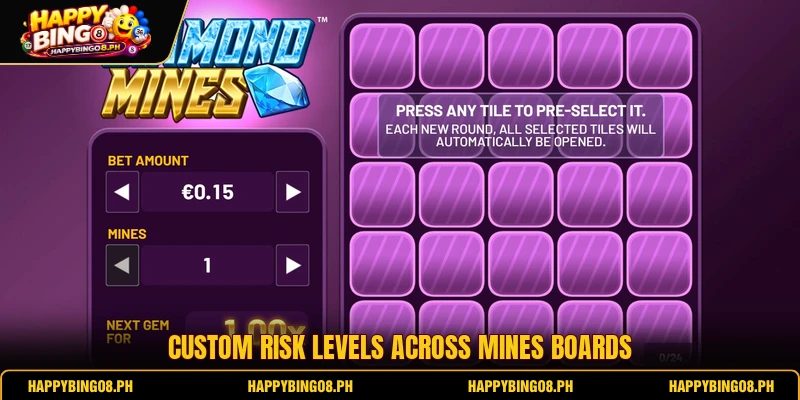
Custom levels in Mines
Custom level selection changes how the board feels before any tile is touched. A calm setup can become tense once bomb density rises across the same grid.
Minimum bomb count in Mines
The lowest setting usually places 1 bomb on a 25-tile grid, leaving 24 safe spaces before the first reveal. This setup gives the widest margin for early tile selection. Score growth remains slow, since the hidden danger covers only 4 percent of the board.
Low bomb play suits measured rounds where the main focus stays on sequence control. A common pattern uses 3 to 6 safe reveals before cashout. That range keeps the round active while avoiding the pressure created by deeper tile chains near the final covered spaces.
Risk still exists because a single bomb can appear anywhere outside revealed safe tiles. Even with 1 hidden danger, guessing without a clear stop point can waste a strong opening. Better control comes from setting a reveal limit before the first click, then closing the round on schedule.
Medium risk challenge
A medium setup often uses 5 to 10 bombs, which changes the board from patient play into sharper decision pressure. On a 5×5 grid, 8 bombs leave 17 safe tiles at the start. That ratio makes every reveal feel meaningful without reaching extreme volatility too soon.
Mid-range Mines rounds reward clear spacing because clustered picks can feel safe while still crossing hidden danger zones. Some players avoid touching adjacent tiles after two safe reveals in one area. This habit does not remove randomness, but it reduces careless repetition across crowded sections.
View more: Plinko – Sharp Ball Drops With Clean Risk Level Control
Cashout planning becomes more important when bomb density reaches roughly 30 percent of the grid. A sensible target may stop after 3 or 4 safe tiles, depending on value growth. Longer chains can look tempting, though each extra reveal cuts the remaining safe share.
High-risk choice
High-risk settings can place 15 to 20 bombs on a 25-tile board, leaving very few safe options. With 18 bombs active, only 7 safe tiles remain before the opening move. This structure creates fast score jumps because the chance of failure rises sharply.
Aggressive Mines rounds are less about long chains, more about choosing limited attempts with strict exits. A single safe reveal can already change the payout display enough to justify stopping. Chasing several tiles in this format often turns a clean hit into a sudden round loss.
High bomb counts require a smaller decision window because each covered square carries heavier danger. Players often set a maximum of 1 or 2 reveals before ending the turn. That simple ceiling keeps emotion away from the grid when early success appears stronger than expected.
Large expanded map frame
Some versions use wider grids, such as 6×6 or 7×7 layouts, to change the visual rhythm. A 6×6 board gives 36 tiles, while a 7×7 board gives 49. Larger maps may feel calmer at first, but bomb distribution can still tighten quickly.
Expanded Mines layouts need slower scanning because tile quantity can hide risk behind visual comfort. A board with 10 bombs across 36 spaces still has more safe tiles than a smaller high-risk grid. However, longer rounds increase exposure when cashout planning stays unclear.
Large maps also make section control more useful because random movement across distant corners can break rhythm. Some players divide the board into 4 zones, then limit reveals inside each area. That approach supports steadier pacing without pretending the hidden bomb pattern can be predicted.
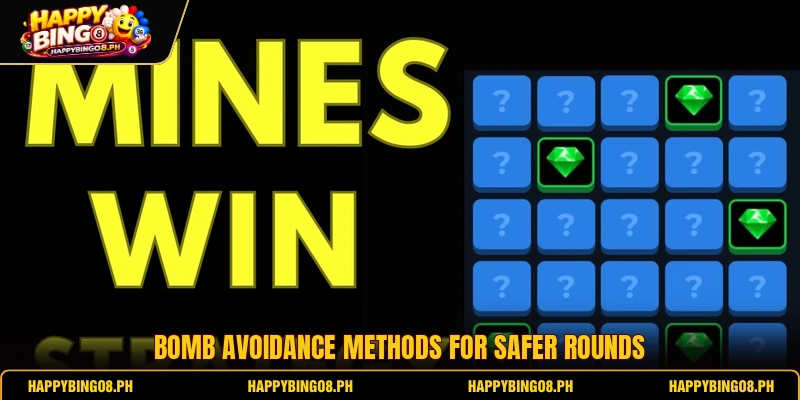
Bomb avoidance strategy for Mines
Safe play begins with a clear limit before the first tile selection. The grid should be treated as a probability field rather than a puzzle with visible clues. Happybingo shows the round state plainly, so each choice can stay tied to risk rather than impulse.
- Early exit rule: Stop after a planned number of safe reveals, especially when bomb density reaches medium or high settings across the board.
- Tile spacing habit: Avoid selecting tightly grouped tiles repeatedly, because clustered success can invite rushed guesses near hidden danger.
- Bomb count check: Review the chosen bomb number before entry, since 3 bombs feels very different from 12 on the same grid.
- Score pause method: After each safe reveal in Mines, pause briefly to compare current value with the risk of another tile.
- Loss reset routine: After a failed round, lower the next stake or bomb count so emotion does not control the following move.
- Brand record note: Keep round patterns simple when using Happybingo, since clean records make risk habits easier to review later.
View more Category: Arcade
Conclusion
Mines works best when tile choices, bomb count, plus exit timing stay connected throughout each round. The game rewards calm limits more than long guessing chains, especially when the board becomes crowded. Create account access carefully with Happybingo, then approach each grid with steady attention.